Moving to Florida? 5 Hidden Costs Nobody Warns You About
Before downsizing or moving to Florida, learn the 5 hidden ownership costs in Charlotte County: the January 1 property tax reset and Save Our Homes portability, wind mitigation insurance credits, FEMA flood zones, seawall responsibility, and HOA/condo reserve rules.
Moving to Florida? 5 Hidden Costs Nobody Warns You About
By Leo Albanes, Licensed Florida Real Estate Broker Since 2002 | Charlotte County Properties Inc.
When out-of-state buyers start downsizing or moving to Florida, the sticker price of the house and Florida's 0% state income tax get almost all of the attention. Across Port Charlotte (33948, 33952, 33953, 33954, 33981), Punta Gorda (33950, 33955, 33980, 33983), Englewood, Rotonda West, and Boca Grande, two homes with the exact same list price on the same street can have annual carrying costs that differ by $6,000 to $15,000+ per year.
After helping buyers and sellers across Charlotte County since 2002, I walk every relocating client through the five hidden ownership costs before we ever write an offer: 1. The First-Year Property Tax Reset, Save Our Homes Cap, and Non-Ad Valorem Assessments 2. Homeowners and Windstorm Insurance Engineering (4-Point and Wind Mitigation Credits) 3. FEMA Flood Zones (X, AE, VE), Elevation Certificates, and Risk Rating 2.0 4. Waterfront Seawall Responsibility, Dock and Lift Upkeep, and Canal Bridge Clearance 5. HOA, Deed-Restricted, CDD, and Condo Reserve Rules (SB 4-D / SB 154) vs. Non-HOA Living
1. The First-Year Property Tax Reset, Homestead Portability, and Non-Ad Valorem Fees
Why the Seller's Tax Bill Resets on January 1 After You Close
Under Florida's Save Our Homes (SOH) constitutional cap (Article VII, Section 4(d)), once a homeowner establishes the Florida Homestead Exemption, the annual increase in their home's assessed value is capped at 3% per year or the Consumer Price Index (CPI), whichever is lower. If a seller in Punta Gorda or Port Charlotte bought their home 12 years ago for $210,000, their capped assessed value might still sit near $245,000, minus the $50,000 Homestead Exemption, leaving a taxable value of $195,000 and an ad valorem tax bill near $2,900/year. Under Florida Statute 193.155(3), a change of ownership triggers a reassessment to fair market value on January 1 following your purchase. If you buy that house for $450,000, your first full-year assessed value resets to roughly 85% to 90% of purchase price ($385,000 to $405,000), moving the ad valorem portion of the bill to roughly $5,000 to $5,800/year even after you file your $50,000 Homestead Exemption by March 1 with the Charlotte County Property Appraiser (ccappraiser.com).
How Florida Homestead Portability (Form DR-501T) Cushions the Reset
If you are downsizing or relocating to Charlotte County from another homesteaded primary residence inside Florida, you can transfer up to $500,000 of your accumulated Save Our Homes assessment differential (Market Value minus Assessed Value) to your new Punta Gorda or Port Charlotte home by filing Form DR-501T by March 1: Upsizing Rule: Buy equal or higher market value and transfer 100% of your dollar differential (up to $500,000), directly reducing your new starting assessed value. Downsizing Rule: Buy a lower-priced home and transfer a proportional share: (New Home Just Value / Old Home Just Value) x Old SOH Differential. If your prior Florida home had a $600,000 market value and a $400,000 assessed value ($200,000 differential), and you downsize to a $450,000 Port Charlotte pool home (75% of the old value), you transfer $150,000 of tax protection, dropping your new starting assessed value from $450,000 to $300,000 before subtracting your $50,000 Homestead Exemption.
Ad Valorem vs. Non-Ad Valorem Assessments on Your TRIM Notice
Every Charlotte County tax bill has two sections: 1. Ad Valorem Taxes: Based on assessed value multiplied by the millage rate (Unincorporated Charlotte County vs. City of Punta Gorda). Homestead, Senior, Widow/Widower, Disability, and Veteran exemptions reduce this section. 2. Non-Ad Valorem Assessments: Fixed annual parcel charges for solid waste, stormwater utilities, MSBU road and street-lighting units, fire/rescue districts, and canal maintenance districts. No exemption reduces non-ad valorem assessments, which range from roughly $600/year to over $2,200/year. Always check the parcel's itemized TRIM (Truth in Millage) sheet on ccappraiser.com before offering.
2. Florida Home Insurance Engineering: Why Two Similar Homes Pay Different Premiums
The 5 Wind Mitigation Credits (Form OIR-B1-1802) That Cut Your Premium
- Roof Geometry (
Hip Roofvs.Gable Roof): A hip roof (sloping down on all four sides like a pyramid, with no more than 10% non-hip perimeter) deflects hurricane wind loads and earns one of the largest windstorm discounts in Florida. - Roof Age and Material: Underwriters scrutinize shingle roofs past 12 to 15 years of age, while metal roofs and concrete or clay tile roofs with modern underlayment carry longer insurability windows.
- Secondary Water Resistance (
SWR): A peel-and-stick self-adhering membrane on the wood roof decking prevents water intrusion if shingles or tiles blow off. - Roof-to-Wall Connections: Single wraps and double wraps (metal hurricane straps wrapping over the truss and nailed into the concrete tie beam) earn much larger credits than older toe-nailed roofs.
- Opening Protection (100% of Openings): Every exterior window, sliding door, entry door, garage door, and skylight must have Florida Building Code (FBC) impact glass or rated hurricane shutters. Missing a single window or non-rated garage door forfeits the opening-protection discount.
The 4-Point Inspection Rules on Older Homes
For homes 15 to 25+ years old, insurers require a 4-Point Inspection covering Roof, Electrical, Plumbing, and HVAC: Plumbing Red Flags: Polybutylene piping, galvanized steel pipes, or corroded cast-iron drain lines can block standard coverage until re-piped. Electrical Red Flags: Federal Pacific (Stab-Lok), Zinsco, Sylvania, or Challenger panels, cloth-sheathed wiring, or double-tapped breakers must be replaced to bind coverage. * Water Heater and HVAC Age: Many carriers require water heaters older than 12 to 15 years to be replaced before binding.
3. FEMA Flood Zones (X, AE, VE) and Risk Rating 2.0
In Charlotte County, homeowners insurance does not cover rising floodwater or storm surge; flood coverage is written separately through the National Flood Insurance Program (NFIP) or private flood carriers.
Understanding Flood Zone Labels vs. Actual Pricing
- Flood Zone
X(500-Year / Minimal-to-Moderate Risk): Lenders do not require mandatory flood insurance in ZoneX. Many inland homes in Port Charlotte (33948, 33952, 33954), Deep Creek (33983), and parts of Rotonda West sit in ZoneX. - Flood Zone
AE(100-Year / Special Flood Hazard Area): Mortgages require flood insurance in ZoneAE, which covers most waterfront lots in Punta Gorda Isles (33950), Burnt Store Isles (33955), and saltwater canals in Port Charlotte and South Gulf Cove (33981). - Flood Zone
VE(Coastal High Hazard / Velocity Wave Action): Found on open-harbor shorelines and barrier islands like Boca Grande and Manasota Key, requiring elevated pilings or breakaway lower enclosures.
How FEMA Risk Rating 2.0 and Policy Assumptions Work
Under FEMA Risk Rating 2.0, your NFIP flood premium is priced per parcel based on distance to water, type of water (canal vs. open Charlotte Harbor vs. the Gulf of America), first-floor height (FFH) above ground and Base Flood Elevation (BFE), foundation type, and replacement cost. Under NFIP rules, a buyer can assume (transfer) the seller's active NFIP flood policy at closing to keep the seller's current glide-path rate (capped at an 18% annual statutory increase on primary residences) instead of repricing from scratch. Always pull both wind and flood quotes during your first 7 to 10 inspection days while your deposit is protected.
4. Waterfront Hidden Costs: Seawalls, Docks, Boat Lifts, and Canal Bridge Clearance
City-Maintained Seawalls vs. Privately Maintained Seawalls
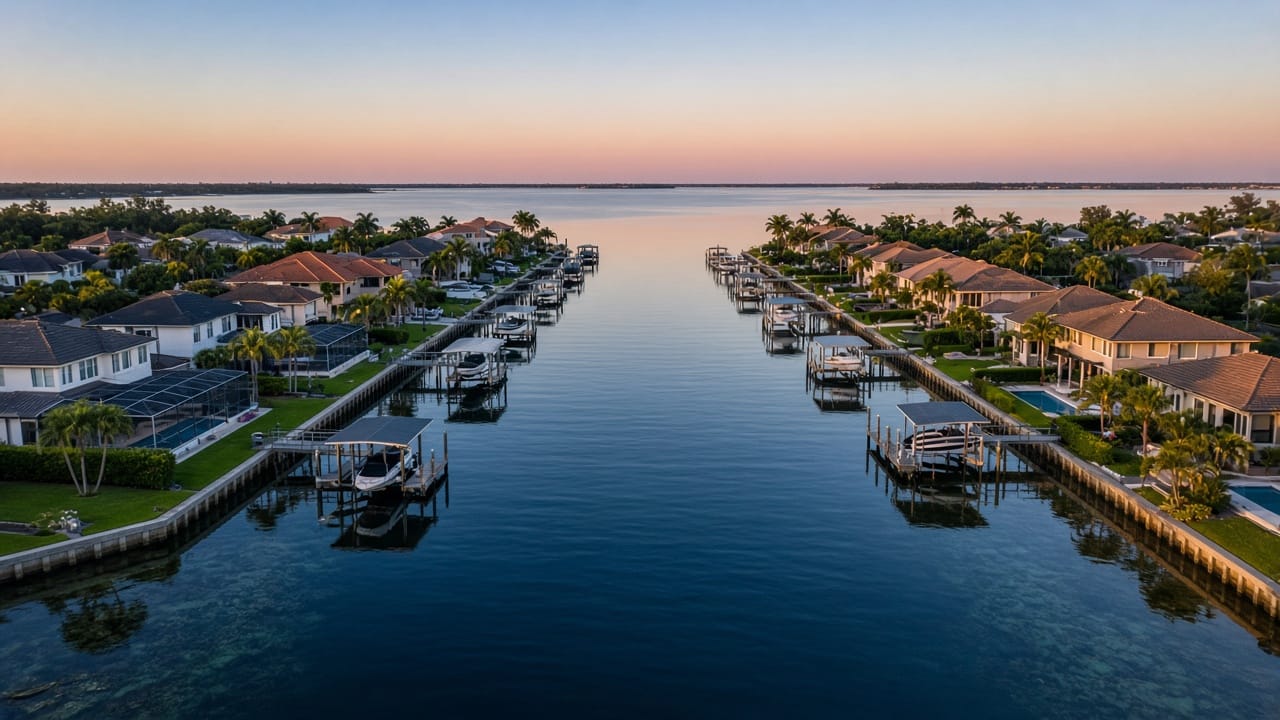
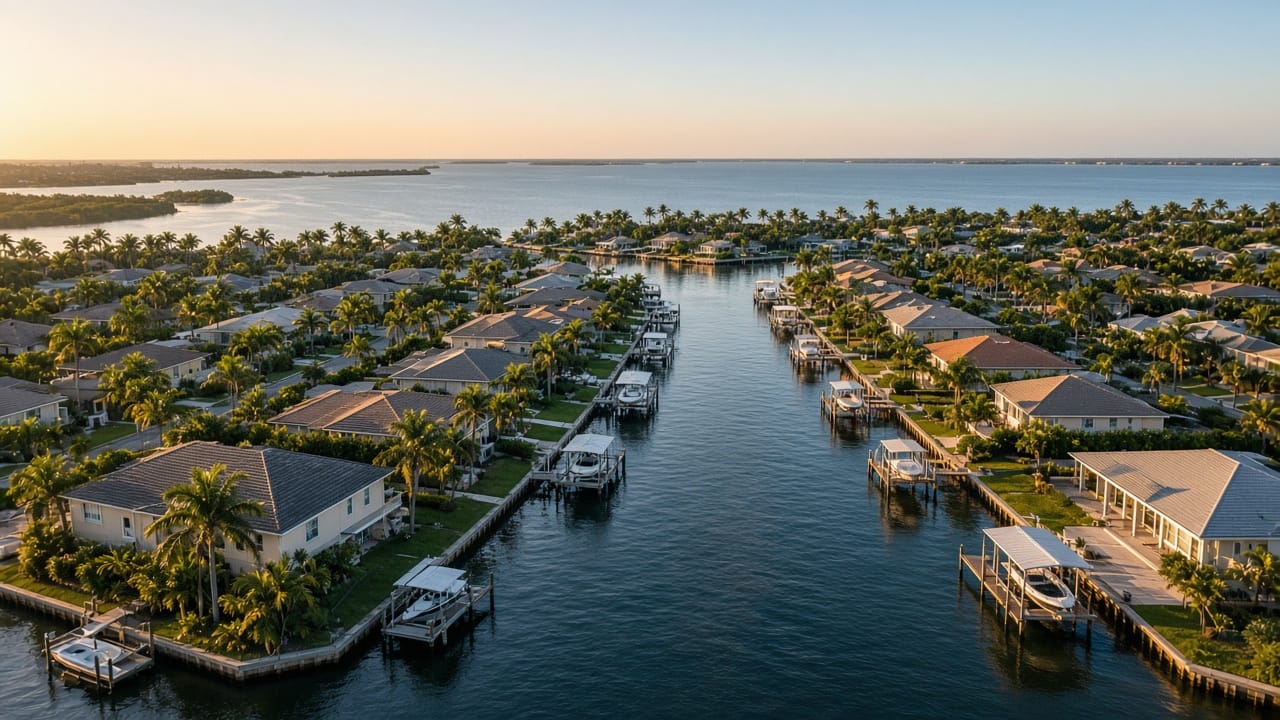
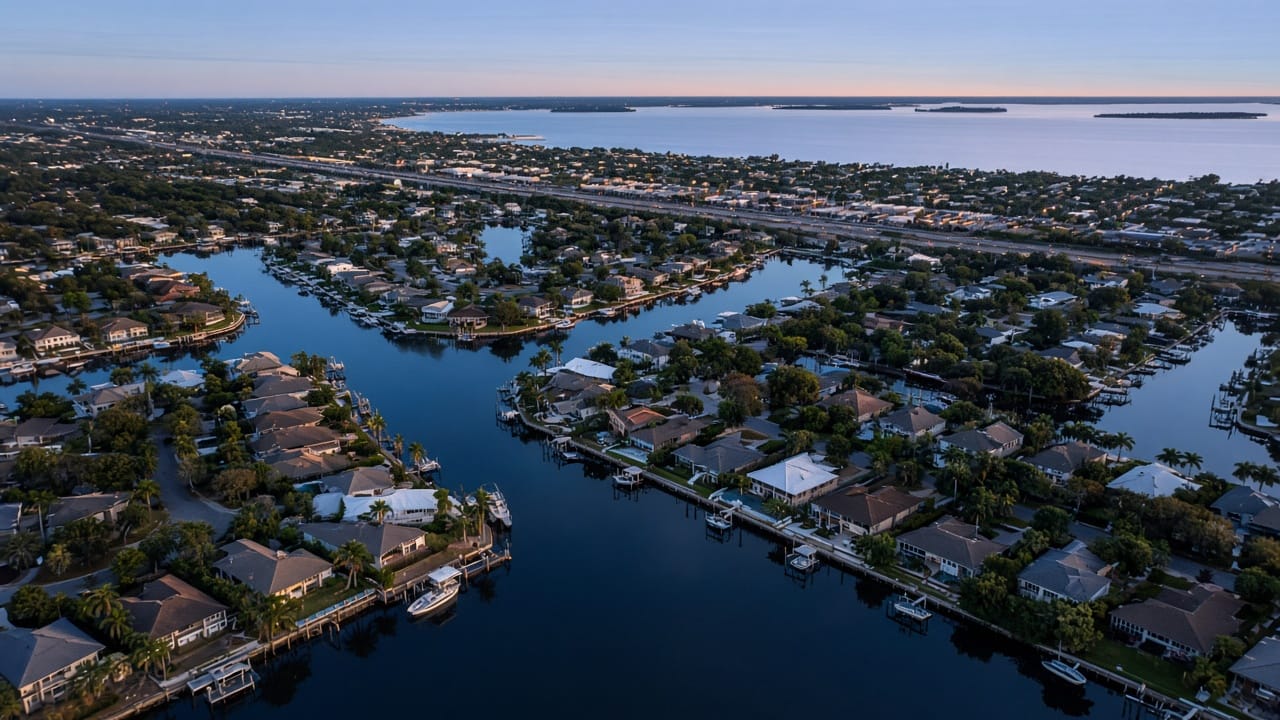
Who pays when a concrete seawall needs a $40,000 to $85,000+ replacement depends on the neighborhood: Punta Gorda Isles (PGI) and Burnt Store Isles (BSI): Both sit inside City of Punta Gorda Canal Maintenance Assessment Districts. You pay a predictable annual non-ad valorem canal assessment on your tax bill, and the City of Punta Gorda maintains, repairs, and replaces the concrete seawall along your lot. Port Charlotte, South Gulf Cove, Harbour Heights and Englewood Waterfront: Seawalls on these canals are 100% privately owned and maintained by the homeowner. Always order a marine contractor seawall inspection to check for cap cracks, rebar rust, outward rotation, tie-back rod tension, and soil washouts behind the cap.
Dock, Boat Lift, and Canal Access Realities
- Dock and Lift Upkeep: Saltwater pilings, stainless lift cables, bunks, and motors require routine upkeep. (Our verified Charlotte County CMA market-value adjustments show a typical resale value contribution of roughly $30,000 for a seawall, $30,000 for a dock, and $20,000 for a boat lift.)
- Bridge Clearance vs. Sailboat Water:
- * Port Charlotte Saltwater Powerboat Canals: Have 10-foot fixed bridges (Edgewater Drive Bridge at 10 feet), so always check clearance for your boat from the waterline to your highest fixed point.
- * Port Charlotte Saltwater Sailboat Canals: Offer no-bridge sailboat water to Charlotte Harbor and the Gulf of America.
- * Port Charlotte Freshwater Canals: End at a road culvert under Tamiami Trail (
US-41), with no boat access to Charlotte Harbor or the Gulf of America. - * Punta Gorda Isles (
PGI) and Burnt Store Isles (BSI): PGI's powerboat section has 13-foot fixed bridges (Marion Avenue Bridge, so always check clearance for your boat), while PGI's sailboat section and Burnt Store Isles offer no-bridge sailboat water to Charlotte Harbor and the Gulf of America (with BSI's Alligator Creek cut carrying a 20-foot beam width limit).
5. HOA, Deed-Restricted, CDD, and Condo Reserve Rules vs. Non-HOA Living
- No HOA and No Deed Restrictions (Most of Port Charlotte
33948, 33952, 33954and Harbour Heights): $0 HOA dues, with greater flexibility for boat trailers, work vehicles, and sheds under county code. - Deed-Restricted Non-Gated POAs (PGI, BSI, Deep Creek
Section 20/23, Rotonda West, South Gulf Cove): Modest annual POA dues (~$145 to $500+/year), plus rules on fences, paint colors, commercial trucks, RVs, and driveway boat trailers. - Gated Master HOAs (Burnt Store Marina, Babcock Ranch, West Port, Riverwood, Heritage Oak Park): Monthly or quarterly HOA/master dues, club minimums, and CDD bond and maintenance assessments on the tax bill.
- Condominiums (
SB 4-DandSB 154): Buildings 3+ stories require Milestone Inspections and Structural Integrity Reserve Studies (SIRS) with mandatory reserve funding. Review the SIRS report, 12 months of minutes, master policy deductibles, and special assessments within your 3-business-day right of rescission (F.S. 718.503).
Frequently Asked Questions
How do I check the exact first-year property tax reset on a Charlotte County home before I make an offer?
Use the Tax Estimator on ccappraiser.com or CharlotteCountyProperties.com with your target purchase price, the $50,000 Homestead Exemption, any Save Our Homes Portability, and the parcel's exact Non-Ad Valorem assessments.
Can I transfer my seller's existing flood insurance policy in Charlotte County?
Yes. Under NFIP rules, a buyer can assume the seller's active NFIP flood policy at closing to preserve the seller's current glide-path rate rather than repricing from scratch.
Want a Complete Line-by-Line Cost Breakdown on Any Charlotte County Home?
Before my clients write an offer in Punta Gorda, Port Charlotte, Burnt Store Isles, Burnt Store Marina, Deep Creek, Rotonda West, or Englewood, we pull the parcel's TRIM tax sheet, FEMA flood zone and elevation certificate, closed building permits, 4-point and wind-mitigation history, seawall condition, bridge clearance, and HOA or condo reserve disclosures so there are zero post-closing surprises.
- Call or text me directly (Leo Albanes, local broker since 2002): (941) 337-3391
- Relocating to Charlotte County? Call or text Ivy on our relocation line at (941) 336-6038 or grab the free Charlotte County Relocation Guide
- Selling a home in Charlotte County? Call or text Victoria on our seller valuation line at (941) 655-9226
- Search live MLS listings & market stats: CharlotteCountyProperties.com
Disclaimer: Always verify your specific tax, homestead, portability, and insurance numbers with a licensed CPA, the Charlotte County Property Appraiser (ccappraiser.com), and a licensed Florida insurance agent. Source: tax records, county records, and MLS data.
Leo Albanes
Broker-Owner, Charlotte County Properties Inc.
Florida Real Estate Broker License #BK3054900
Over 20 years helping buyers, sellers, and investors navigate Charlotte County. Punta Gorda-based. Se habla español.