5 Mistakes People Make Buying a Home in Florida — From Over 20 Years of Watching It Go Wrong
Wind mitigation, flood zones, roof age, canal access, and the tax reassessment trap. Five costly mistakes Florida homebuyers make — and how to avoid every one of them.
I've been selling real estate in Charlotte County for over 20 years. I've helped a lot of people buy homes here, and in all that time I keep seeing the same five mistakes — mistakes that turn a dream home into a financial headache.
These aren't obscure technicalities. They're common, costly, and almost entirely preventable. Every single one of them comes down to the same root cause: buyers bring their assumptions from up north and don't realize that Florida plays by different rules.
Here are the five mistakes — and how to avoid every one of them.
Mistake #1: Skipping the Wind Mitigation Inspection
This is the single most expensive mistake buyers make in Florida, and most people have never even heard of it.
A wind mitigation inspection costs about $125. A licensed inspector evaluates seven features of your home: roof shape, roof-to-wall connections, opening protection (hurricane shutters or impact windows), secondary water resistance, and roof covering type. Based on the results, Florida law requires your insurance company to give you discounts.
The savings are significant: 25% to 45% off the windstorm portion of your premium. On a typical Charlotte County home with a $4,000 annual premium, that's $1,000 to $1,800 back in your pocket — every single year. From a one-time $125 inspection.
And yet, the majority of buyers I work with have never heard of it. Their previous agent didn't mention it. Their lender didn't mention it. They just pay the full premium and never know they're overpaying.
What to do: Schedule a wind mitigation inspection before you close — or within the first month of owning the home. Ask your insurance agent to re-quote your policy with the inspection results. If your home was built after 2002, it likely qualifies for the best discounts automatically because it was built to the updated Florida Building Code.
Mistake #2: Not Understanding Flood Zones Before Buying
Here's something that catches relocators off guard: homeowners insurance does not cover flood damage. That's a completely separate policy. And whether you need it — and what it costs — depends entirely on your flood zone.
In Charlotte County, flood zones vary dramatically from one street to the next. One home might be in Zone X (minimal risk, no flood insurance required by lenders). The home across the street might be in Zone AE (high risk, flood insurance mandatory, $700 to $2,500 per year through NFIP).
Hurricane Ian in 2022 proved why this matters. Homes that flooded without flood insurance faced catastrophic uninsured losses. Homes with flood insurance recovered.
What to do: Before you make an offer on any property, look up its flood zone. Charlotte County's Forerunner tool (charlottecountyfl.withforerunner.com) lets you check any address for free. If the home is in a high-risk zone, factor $700 to $2,500 per year into your budget. If it's in Zone X, flood insurance is optional but still worth considering — Ian flooded plenty of Zone X homes that "weren't supposed to flood."
Charlotte County participates in the Community Rating System, which can earn you a 20% discount on NFIP flood policies. Ask your insurance agent about it.
Mistake #3: Ignoring Roof Age
In Florida, your roof is your insurance policy's gatekeeper. And most out-of-state buyers have no idea how much power it has over their costs.
Here's the rule: if your roof is older than 15 years, many Florida insurance carriers will not write you a new policy. Some won't insure a roof older than 10 years. Even if a carrier will cover an older roof, your premium will be dramatically higher — sometimes 25% to 50% more than a home with a new roof.
I've watched buyers fall in love with a beautiful home, go to close, and discover that insurance is $2,000 more per year than they budgeted because the roof is 18 years old. That changes the entire financial picture.
What to do: Before you make an offer, ask for the roof age. It should be in the seller's disclosure or the listing details. If the roof is over 12 years old, get a roof inspection (separate from the general home inspection). Factor the potential cost of a roof replacement ($15,000 to $30,000 depending on size and material) into your negotiation. A new roof isn't just a maintenance item in Florida — it's an insurance strategy. Metal roofs qualify for the longest lifespan credits and the best insurance discounts.
Mistake #4: Not Knowing the Difference Between Sailboat and Powerboat Canals
This one is specific to Charlotte County, and it costs people serious money.
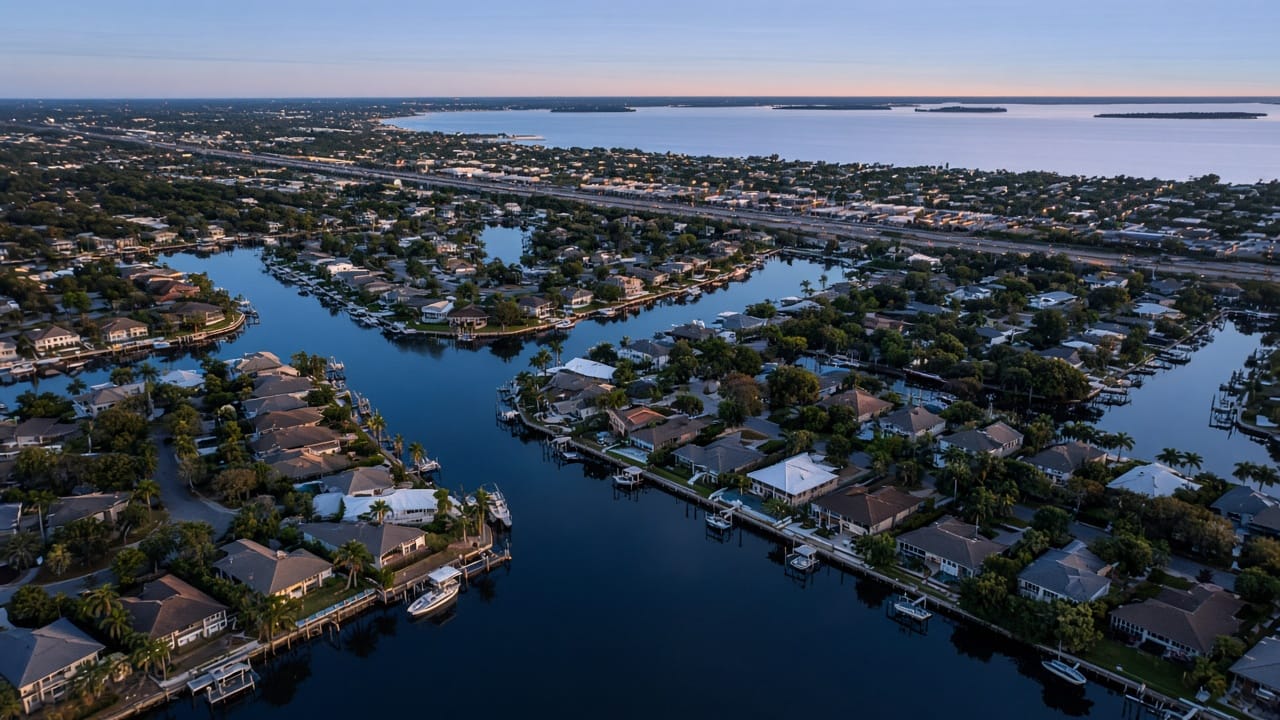
Charlotte County has an extensive canal system — hundreds of miles of waterways connecting to Charlotte Harbor and the Gulf. But not all canals are equal. Sailboat-access canals have no fixed bridges, meaning your mast clears freely all the way to open water. Powerboat-only canals have fixed bridges or low clearances that restrict sailboat passage.
The price difference is dramatic. A powerboat-access canal home in Port Charlotte might cost $350,000. A sailboat-access canal home in Punta Gorda Isles with the same square footage might cost $550,000 or more. If you're a powerboater paying a sailboat premium, you're overpaying for access you don't need. If you're a sailboat owner buying on a powerboat canal, you're stuck.
I've seen both mistakes. A couple bought a "waterfront canal home" without asking about bridge clearances and discovered their 36-foot sailboat couldn't get to the harbor. Another family paid $200,000 more for sailboat access when they owned a center console fishing boat and could have been on the water for far less.
What to do: Before you look at any waterfront property, know what kind of boat you have (or plan to have) and what access you need. Our chatbot at charlottecountyproperties.com has exact bridge clearance data, canal classifications, and sailboat vs. powerboat access zones for every section of Punta Gorda Isles and the surrounding communities. Ask it — that data can save you six figures.
Mistake #5: Assuming the Property Taxes on the Listing Are What You'll Pay
This might be the most misunderstood aspect of buying a home in Florida, and it catches almost every out-of-state buyer off guard.
When you see a property listing that says "Annual taxes: $1,920," that's what the current owner is paying — based on their assessed value, which may have been capped for years by Florida's Save Our Homes amendment (3% annual increase cap). When the home sells, the assessed value resets to the purchase price. Your taxes will be different.
Here's a real example. A seller bought their home years ago for $180,000. With Save Our Homes, their assessed value might be $200,000, and they're paying $1,920 a year. You buy that home for $350,000. After your homestead exemption ($50,000 off), your taxable value is $300,000. At Charlotte County's rate, you'll pay about $2,880 a year — $960 more per year than what the listing showed. That's $80 more per month that wasn't in your budget.
The good news: if you're selling a homesteaded property in another Florida county, you may be able to transfer some of your Save Our Homes benefit through "portability." This can significantly reduce the tax jump. But you have to file for it — it's not automatic.
What to do: Never use the listing's tax amount as your budget number. Calculate your own: take the purchase price, subtract $50,000 for homestead exemption, multiply by the millage rate (approximately 0.96% effective in Charlotte County). Use the Charlotte County Tax Estimator at ccappraiser.com/TaxEstimator for a precise calculation. And if you're moving from another Florida home, ask your CPA or agent about portability.
The Real Cost of Not Knowing
Each of these mistakes on its own is manageable. But stack two or three of them — skip the wind mitigation, buy in a flood zone you didn't research, inherit a 16-year-old roof, and budget from the listing's tax number — and you can easily find yourself $3,000 to $5,000 per year over budget. On a fixed retirement income, that's the difference between comfortable and stressed.
The buyers who do well in Charlotte County are the ones who learn these five things before they sign anything. Not after.
Resources
- Check flood zones: charlottecountyfl.withforerunner.com
- Tax estimator: ccappraiser.com/TaxEstimator
- Search active listings: charlottecountyproperties.com/search
- Waterfront homes + canal data: charlottecountyproperties.com/waterfront
- Live market statistics: charlottecountyproperties.com/market-statistics
- Neighborhood guides: charlottecountyproperties.com/guides
- Free Relocation Guide: charlottecountyproperties.com/relocation-guide
Don't Make These Mistakes
If you're considering buying in Charlotte County and you want someone to walk through these five items with you on a specific property, I offer a free 15-minute relocation strategy call. No sales pitch — just straight answers so you don't learn these lessons the expensive way. Book a strategy call or download the free Relocation Guide to get started.
Leo Albanes
Broker-Owner, Charlotte County Properties Inc.
Florida Real Estate Broker License #BK3054900
Over 20 years helping buyers, sellers, and investors navigate Charlotte County. Punta Gorda-based. Se habla español.